How to Draw a Stage Lighting Plan
All kinds of lighting pattern software are available today, the benefits of CAD and visualisation tools are undeniable. On Stage Lighting regularly hears from offset time lighting designers including BTEC students, asking the all-time fashion to draw lighting plan. This article looks a the basics of planning a lighting design and the real purpose of drawing a good stage lighting diagram.
*Annotation that at that place are CAD video resources at the On Stage Lighting YouTube channel, including tutorials on Vectorworks and AutoCAD.
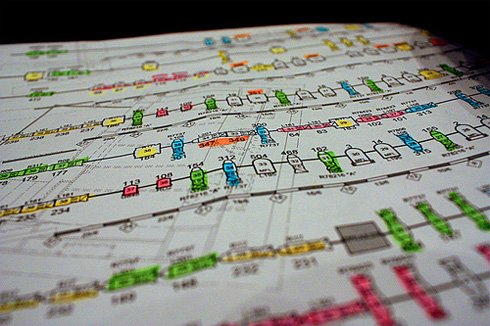
Image past JohnandKeturah on Flickr
A Stage Lighting Plan is…?
The lighting plan is the Lighting Designers tool, planning the location of lighting equipment and communicating information to everyone else. Originally drafted on newspaper (cave painting of fire beacon designs have yet to be found) CAD has taken over but let'south forget about grids, snaps and polysplines for the minute.
The programme (some people call it a "plot" or the "Desperate" in Lampie rhyming slang) is the bird's centre representation of the venue, lighting positions and fixtures. During the design stage, the LD uses it to experiment with angles and placements. Afterward the design is finalised, the lighting crew use the plan to rig, plug up and focus the fixtures while the LD refers to the program to find dimmer channels when setting the calorie-free levels.
What course should my lighting plans accept?
I take probably drawn as many plans on the back of bout schedules as I have CADed and Wyg-ed up full english breakfast drawings. The plan doesn't need to be complex, it just need to fulfill its purpose. If it's to show the local coiffure where to hang upwards stuff, a fag packet sketch is going to be fine. It's all yous can do in half an 60 minutes while they're unloading the truck, anyhow.
When learning stage lighting, it's tempting to try to apply every available tool at your disposal to create a drafting masterpiece that could cut it at Tate Mod. That'south fine and a good fashion of learning the software. Don't forget that drawing a lighting plan is not the same as doing a lighting design – effort not to let your struggles with symbol libraries become the entirety of your day.
A dainty compromise between a blunt pencil sketch and multi layered, cake ridden hell is a tidy calibration drawing of the venue with some standard lighting symbols and clear text. Scale drawings are important, even if they are only simple line representations of confined and fixtures. It's impossible to use the lighting programme to make design decisions if the confined are not the right length (or in the right identify) and the lantern symbols are way out of proportion.
Y'all could do a simple computer drawing with something like Sketchup or just apply a pencil and paper. 5mm squared paper is not bad as a quick aid to scale cartoon using something similar 1 square to 500mm or 1 ft – whatever fits your venue on the drawing. If you're going to depict, beginning in pencil and don't ink anything in until the final minute. Using tracing paper "layers" can keep your venue / set drawings seperate from the Lx plan.
It' OK to "cheat" some of your rigging positions to within the sheet limits if they are a long way from everything else. Just remember to take this into account when planning throw distances and angles.
Below is an example of a lighting bar, showing lanterns and data.

Using Fixture Symbols
A critical element when drawing a lighting programme is the representation of lighting fixtures. Earlier CAD, the lighting designer drew with plastic stencils and this method reminds united states that complex pictures of lanterns with every nut and bolt are pointless. The symbols need to exist clear, recognisable and have some room to insert vital information such as gel colours etc.
The scale of the symbols, although non always an verbal footprint, should represent how much room a lantern might accept up on the bar. When drawing lantern symbols, information technology'southward good to "bespeak" the lantern in the direction of focus rather than plonking them all in the "straight ahead" position. This show upward any potential bug with fixtures rigged likewise close to each other – another reason why symbol scale is important.
There are some recognised generic lantern symbols that conspicuously show profile spots, fresnels and floodlights and you tin can add to these with your own depending on the different types of fixture of your testify. It's just important that the lighting crew can easily tell 1 fixture type from the side by side. This is often a problem with using manufacturer'southward CAD symbols – they are circuitous and look too similar without close inpection – Spots vs. Washes for example.
Other Information on the Diagram
A skillful lighting programme should have all the available information for the electricians and coiffure to work from when rigging the equipment. This makes it a little abrasive when the crew ask you a question that they could've found the answer to on the drawing but…..! Communication with the lighting crew is what it'southward all about. The lighting program volition also contain aide memoirs virtually other Lighting Designer-y information for you to utilise during the focus and plot.
Each fixture might have the gel number, circuit hook up, dimmer channel, DMX accost and job/focus equally well as details of accessories such every bit gobos or irises. The important matter it so keep these number and notes clear and uniform. Some LD'south put their gel number in the centre of the lantern symbol which is where others might insert the control aqueduct. Some symbols have the beam bending of a stock-still contour spot on the lens tube, on other plans this might be where the gobo number is. Simply make it brand sense and the same for every symbol on your plan.
Other areas of the plan might show particular infrastructure notes, patch panels, multicore numbers or details of power and dimming positions. Laying out technical details volition likewise help you lot or your electrician create the equipment inventory needed for the show. Cable runs calculated and extra kit ordered.
If you lot are looking for more than data on conventions, search for "USITT Theatrical Lighting Design" to come across their document outlining their take on the standards and conventions for the ways to testify lighting program information, many of which are utilize throughout the theatre manufacture and beyond.
Hither are some examples of generic symbols and some conventions to show information such every bit channels or gel numbers.

Create Your Own Lighting Plan
Drawing a lighting programme is not lighting design. Using drafting techniques to communicate ideas is part of the lighting designers armoury. If yous are doing your outset lighting design, create a unproblematic calibration layout of your venue and using symbols to represent your lighting equipment. And possibly interruption out the CAD on a rainy mean solar day.
Footnote: BTEC Level 3 Stage Lighting Pattern Unit
This note is for students working within the Uk BTEC Production Arts at Level 3 in the United kingdom of great britain and northern ireland.
According to Edexcel marking criteria for the lighting pattern unit, in club to achieve a PASS, the learner must demonstrate the ability to communicate a lighting design and and at least "produce accurate manual drawings using established conventions." This means working carefully to calibration, using technical drawing tools to ensure clean and accurate drawings, using standardised lantern symbols, all marked up with gel numbers, dimmers or other data using conventional notation recognisable by a lighting squad. At that place is plenty of information on these techniques, both the USITT guide mentioned above and any good book on phase lighting.
In order to proceeds a MERIT, the guidelines tell us that the learner must evidence both an level of competence in both hand drawn and some class of CAD, while a DISTINCTION also includes some level of visualisation using either CAD or an actual model.
The side by side step on the route to a practiced marking is to make sure that you empathize calibration and elementary technical cartoon, can depict accurately and neatly and accept researched conventions for representing theatrical lighting equipment and design ideas on newspaper. Skilful Luck.
Rob Sayer HND PGDip FHEA is a Senior Lecturer in Technical Theatre Production, mentor, and consultant in stage lighting and teaching. Every bit a professional person lighting designer, Rob designed and programmed theatre performances, music festivals and large corporate events for blue chip companies while travelling all over Europe. With a background in theatre, he combines traditional stage lighting knowledge alongside fast moving lighting and video applied science in the world of commercial events.
Source: https://www.onstagelighting.co.uk/lighting-design/stage-lighting-plan/
0 Response to "How to Draw a Stage Lighting Plan"
Enviar um comentário